




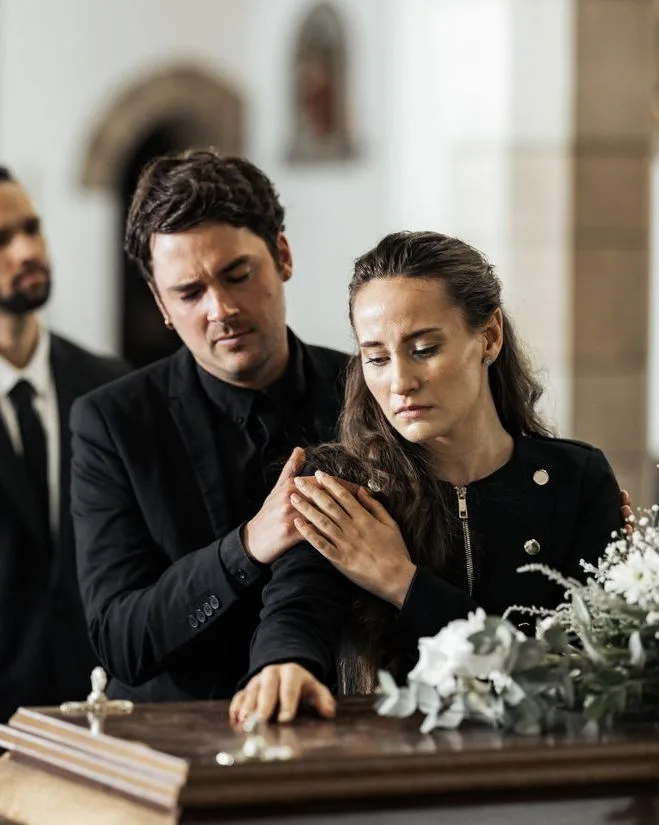
“Dying Is Expensive.”
The Kinder Way Podcast – Episode 6





The information provided in The Kinder Way Podcast is for educational purposes only, and is not intended as a substitute for professional advice from a licensed advisor. The content of each episode is the opinion of the host and interviewees, and does not represent the views of Serenia Life Financial or any of its other subsidiaries or affiliates. Please always consult a licensed insurance advisor for guidance. Serenia Life Financial does not endorse any third-party views referenced in this content.
In Episode 6, our host digs into why dying is expensive with Serenia Life’s Chief Distribution Officer. This candid conversation about the cost of dying in Canada is a true eye-opener. If you’ve ever asked yourself, “is dying expensive?” — this episode has the answers (and more). You’ll learn why Canadians need to pay closer attention to capital gains tax, the hidden expenses young families should prepare for, and practical insights to ease the burden. And, as always, don’t miss the sprinkle of kindness at the end!
Related Articles:
- Do You Really Want to Sell the House?
- Crowdfunding Like GoFundMe Is Not Life Insurance
- As a mom, here’s why I’m grateful for life insurance
Episode Transcript
Kathleen O’Hagan: Ever wondered how life insurance fits into your financial plan? Or why someone would buy it for a child? No? Me neither. Until I became a life insurance convert, that is. I’m Kathleen O’Hagan, digital content strategist and writer at Serenia Life and host of the Kinder Way podcast. I’m also a married mom with a mortgage. Try saying that five times fast. Navigating the same financial ups and downs as many Canadians today. So stick around! Let’s figure out this financial stuff together, one episode at a time.
KO: Hello and welcome back to the Kinder Way podcast. Today I’m looking forward to speaking with Duane Zappitelli, Chief Distribution Officer here at Serenia Life about a topic that most of us are typically not that excited to talk about: death. With 27 years in the industry under his belt, Duane was one of the people who patiently educated me on the topic of life insurance in my early days at this organization. Outside of work, Duane enjoys spending time with his family as well as playing golf, hockey and guitar.
Fun fact: Once upon a time, Duane was even part of a band, but it’s been about 10 years since they performed together because, well, life. In today’s episode, Duane will share insights based on his own personal and professional experience about the impacts death can have on a family.
Just to note that this episode should not be considered a substitute for legal or financial advice. Please be sure to always consult a qualified professional for guidance that is specific to your situation.
Hi, Duane, welcome to the show.
Duane Zappitelli: Thank you very much Kathleen and happy to be here.
KO: Great, well let’s get right into it. As I’m sure you recall, you got the fun of training me when I first started working at Serenia Life and knew very little about life insurance. At one point you said to me, “dying is expensive.” And I remember thinking that was a bit of an odd statement. But four and a half years later, and I now get it completely. Assuming most people are like the old me and think the only thing that costs money after someone dies is the funeral, can you briefly list out all the things that make dying expensive, as you say?
DZ: There’s many costs that people don’t realize until they experience having a loved one pass away and then they’re in charge of taking care of arrangements. example is a funeral. Even a simple cremation can cost $10,000. Funeral may cost up to $25,000 depending on the wishes of the individual that passed away. In addition to this, there’s creditors. So might be credit cards, car loans, student loans, etc. that have to be paid out in full as soon as possible. There are also final taxes that will have to be paid. Not to mention there may be a home to be sold.
Which of course can seem like an immediate source of income to help offset the costs. However, you have to keep in mind that there are some delays that the government may introduce that I’m not going to get into in detail, but that may prevent you from selling the home right away. And there’s also capital gains taxes. If there’s multiple properties, that means more money to the government upon the sale. So like I said, know, dying is expensive. Those are just a few examples. Although the funds may be there eventually, it can be a real burden on the family and friends while they’re waiting for the government to allow you to sell the home and for other tests and possibly autopsies and different things to be granted. So during that time, the creditors still expect that you’re paying the mortgage and paying for the bills and most of the time that’s out of the pocket of the family.
KO: Right, thanks. Yeah, that’s definitely a lot and I think a lot of people don’t think about the fact that you might have to wait for that money to come in. So thanks for mentioning that. You did also mention capital gains taxes and I was reminded that that was in the news a lot last year when our Prime Minister at the time, Justin Trudeau, announced changes that would find Canadians who inherit a second property paying a larger sum of taxes than previously. Prime Minister Carney has reversed this decision.
But why are capital gains taxes something we still need to be aware of?
DZ: You’re right Kathleen, that was definitely a hot topic in the news over the past couple of years. This really applies more only when there’s more than one property owned beyond the main home where people live. This can get complex, so let’s look at an example. So say there’s a couple, they’re an older couple, they own their home and they own a cottage. The couple has two adult children, we’ll call them John and Joan. And now the couple has outlined in their will that they want the home to go to John and the cottage to go to Joan, and that they would like both properties sold immediately. So now when you look at John receiving the home, he can sell it immediately with no capital gains implications. John would inherit that home and the difference between the value of the home and any mortgage, if there is a mortgage on the home, would go to John tax free. So that’s a really good deal for John. In the case of Joan that receives the cottage, because it’s not the primary residence of the parents, this would be subject to what we call capital gains.
Yeah, capital gains tax after the sale, the government basically calculates the value of the cottage when the parents purchased it versus the value it’s sold for.
So to get some real numbers, let’s say they purchased this cottage for $200,000 in the early 90s, and it’s going to be sold by Joan for a million dollars in 2025. In this case, the capital gain is one million minus the original 200,000 it was purchased for. So that’s $800,000. Now under the current capital gains rules for properties, half of the $800,000 gain, which is $400,000, is subject to capital gains tax.
So basically that $400K is added to the income for Joan in that year and taxed at her marginal tax rate. So you can see Joan, you know, earned an extra $400,000. Now I know this gets extremely complex. There’s also capital gains exemptions. There’s also, as it gets higher, you may have different capital gains rates, but essentially it’s really important to speak to an advisor to understand the full implications of what this capital gains tax would mean.
What I really wanted to show was that in this case, although the parents thought they were helping their children equally, Joan, by inheriting the cottage, which is a second property, really does not get the same value as John will get by getting the home tax free when the proceeds are paid out after the sale.
KO: Wow, that’s really important to know, especially because I’m sure there are lot of millennials who are going to be inheriting cottages within the next few years. Okay, well, let’s think about a younger couple now with a new home, a couple of kids and a pretty decent standard of living thanks to their two salaries. What should that type of couple be aware of when it comes to any costs associated with their spouse dying too soon?
DZ: That’s another great question and much less complex than the last situation. So when there is a couple and one passes away, now you’ve got one parent left to figure out how to pay all the bills, including the mortgage, children’s education, and do all of that in one income. So this can be very challenging. what I’ve said through the past couple of questions, I’ll say again, they really should have an advisor. So I’ll go back to now looking at it without an advisor here for ease of just explaining it. With a decent standard of living they likely have some assets and they’ll want to protect those assets through life insurance They also given that they have children they’ll want to ensure that they sustain the standard of living for the children should one parent pass away and You know, it’s only one income that’s left. So again life insurance could be the solution here So with life insurance the surviving spouse can use that to pay and basically give themselves a second income So they could invest that and draw an income from it. They can also set up RESPs for the
children or there’s a host of other options to sustain the standard of living for that family and to ensure that both the surviving spouse and the children can continue to live the way that they were. Now they should also have a will and power of attorney in place to ensure that if one of them passes away prematurely there is a plan in place to have the children raised in the way that they intended. At the risk of getting into more specifics I think the advisor again is the key here to make sure that you have everything set up properly. So as much as people don’t want to talk about dying and it’s not a very fun topic, the more you can do to plan for the inevitable, because death and taxes are inevitable, the better your family will be positioned to sustain their standard of living and to move on when a loved one is lost.
KO: Right, yeah, that makes sense. What about, I know you’ve been in the insurance industry for quite a while, do you have any anecdotes about previous clients or people you know were either not having life insurance or having life insurance impacted them in a significant way?
DZ: Absolutely. The sad part is that when someone loses a loved one, nothing will replace them and that pain or the loss, the pain, sorry, of the loss never goes away. I’ve seen situations where families lose a loved one and where there’s no planning put in place. And in these situations, this means they’re not only dealing with the loss of that loved one, but they also have to decide, is there a burial? Is there a cremation? Is there a service or a celebration? You know, these are might sound like easy decisions, but they’re tough, especially if you have more than one decision maker. So if someone dies without a will and it’s a parent and you have siblings that are trying to figure this out, this can rip families apart. And they also have to figure out really quickly, now who’s going to be the lead on settling the estate? And again, this will be a lot of paperwork, meetings, phone calls, frustration. And when you’ve got a number of individuals looking out for, in some cases, their best interest versus the best interest of the person that passed away can make people do funny things, it can really break up a family, as I mentioned, and more might be lost to expenses or to taxes just based on the fact that the family can’t agree. Now conversely – and again, I know the loved one being lost cannot be replaced – but I’ve seen families where they have a will, they have a power of attorney, there’s life insurance, there’s segregated funds, there’s beneficiaries that are named and all the plans were put in place. This makes for a much more smooth experience for all things beyond the personal grieving.
However, this situation I’ve seen far less. So it really is important to be on that side of planning and to ensure that you don’t have to deal with the loss versus having to deal with all of the other pieces which could have easily been avoided.
KO: Good point. Anything else you feel may not be common knowledge that our listeners should be aware of when it comes to the cost of someone you love dying?
DZ: Yeah, for sure. I think most Canadians don’t realize that life insurance and investment advisors don’t just sell products, but they do have an expertise that can help you and your family. You know, in the event that you live too long, you die too soon, or you suffer a life altering illness. Everyone should have an advisor they trust that can help them plan through their lifetime. know, things will look different as you move from single to being married to being a parent or basically whatever path you take. Every stage of your life, things are going to look different and your needs are going to be different, and an advisor can help you with that. So if you already have an advisor, that’s great. Make sure you’re working with them to plan the best way to transfer your estate to loved ones, to retire the way that you want to retire, to plan your children’s future and anything else that’s important to you. But if you don’t have an advisor, I really hope you’ll take action to find one after listening to some of these tips.
KO: Some great advice there, thank you. And I think it is time to talk about a happier topic now. It’s that time in the show where we sprinkle a little bit of kindness into our listeners’ day. Can you share a time when you participated in or observed an act of kindness that moved you?
DZ: Yeah, actually your timing for that question is great. So right now we’ve got a team at Serenia Life preparing to participate in the Hockey Helps the Homeless Hockey Charity Tournament that’s happening in October. And this is the 11th year I participated in the tournament. It’s the sixth year that we’ve done it as a Serenia Life team. And it’s really great because we get a chance to, know, the hockey part is fantastic. We get a bit of exercise, but the main reason that we participate is to raise funds for those in our community that need the income. And I’ve seen firsthand how much we help people and how much of an impact we’re making to better the community here in the Waterloo region. So it’s a lot of fun, but at the same time, we know why we’re participating and we know that the charity is, the six charities actually that are benefiting from this are able to give back to the community and help people to have a brighter future.
KO: That’s a great example and wow 11 years that’s pretty awesome. Thank you so much for sharing and thanks again Duane for taking the time to chat with me today.
DZ: Thank you very much, Kathleen. It was a pleasure to talk with you today.
KO: And thanks to all of you for listening. As always, you are more than welcome to send me an email at podcast@serenialife.ca if you have a question or an idea for a future episode.
See you next time!
This episode was written and hosted by me, Kathleen O’Hagan. Video and audio edits by Teresa Moscardo and sponsored by Serenia Life Financial, the kinder way to do life insurance.
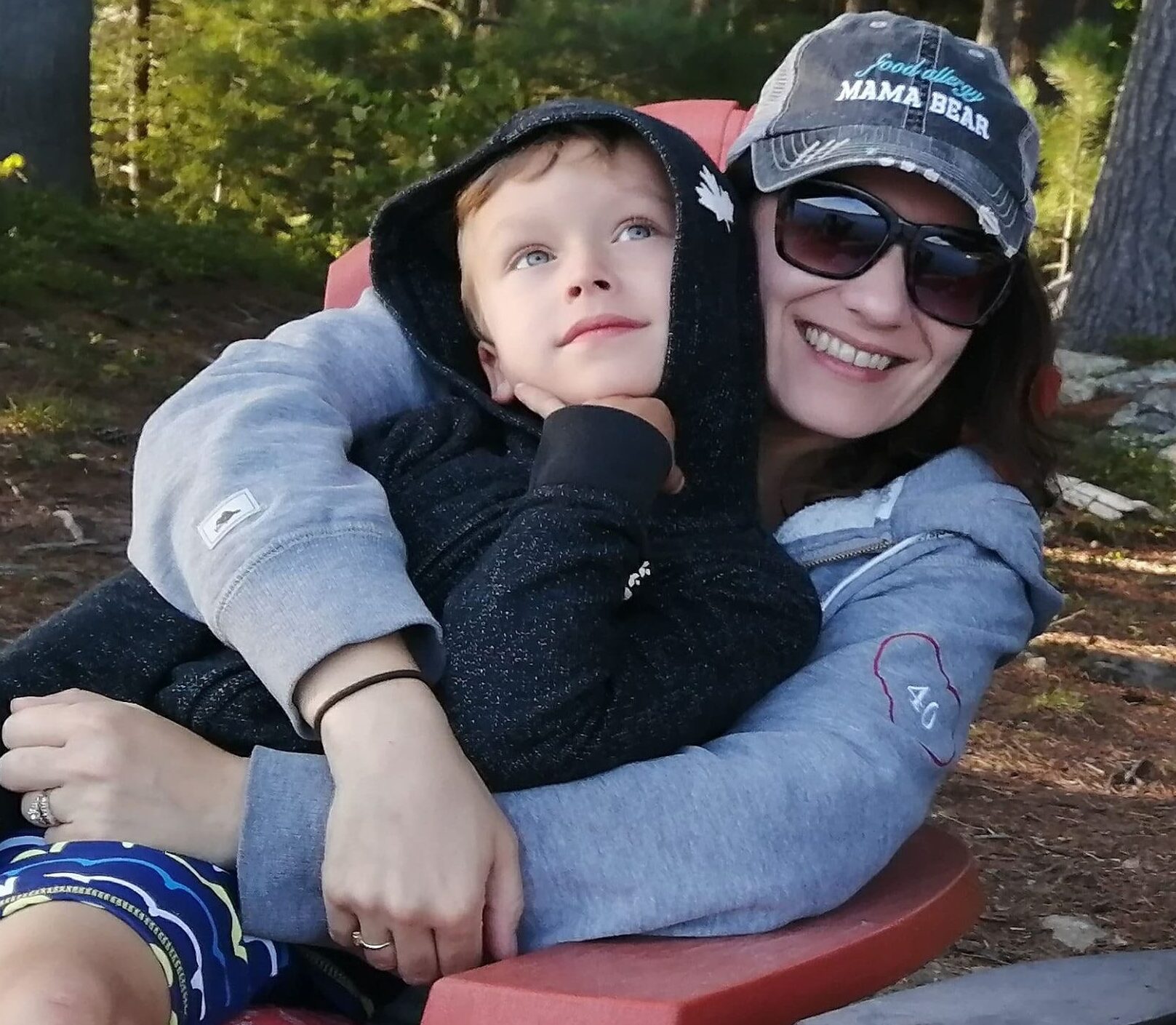
Meet our Host
Kathleen O’Hagan is the Digital Content Strategist & Writer at Serenia Life. She is married with one kid and two cats, and enjoys travel, discovering new restaurants, and idealizing life in the 80s and 90s. (Yes, she bought life insurance for her son – it’s an investment in his future! And yes, her pets are in her will.) See what else she has to say as host of the newly launched The Kinder Way Podcast.
